
Self-compassion gets a bad rap. Many people seem to think it stands in direct opposition to pushing yourself to do your best, that it’s about making excuses, and that it’s self-pitying. But I’m here to tell you that self-compassion can actually enhance excellence—if you’re doing it often enough.
To begin this journey of being kinder to yourself, I’m first exploring and defining compassion. To help, I’m pulling from a couple of my favorite minds. From there, we can properly treat self-compassion as the powerful tool it truly is.
So listen in as I explore this fascinating concept, including how we’ve been socialized to believe it’s some sort of bad thing. I’m then outlining a simple but effective exercise to practice self-compassion. Even more, I’ll explain how engaging in it can help high achievers like us avoid self-flagellation. Let’s get started.
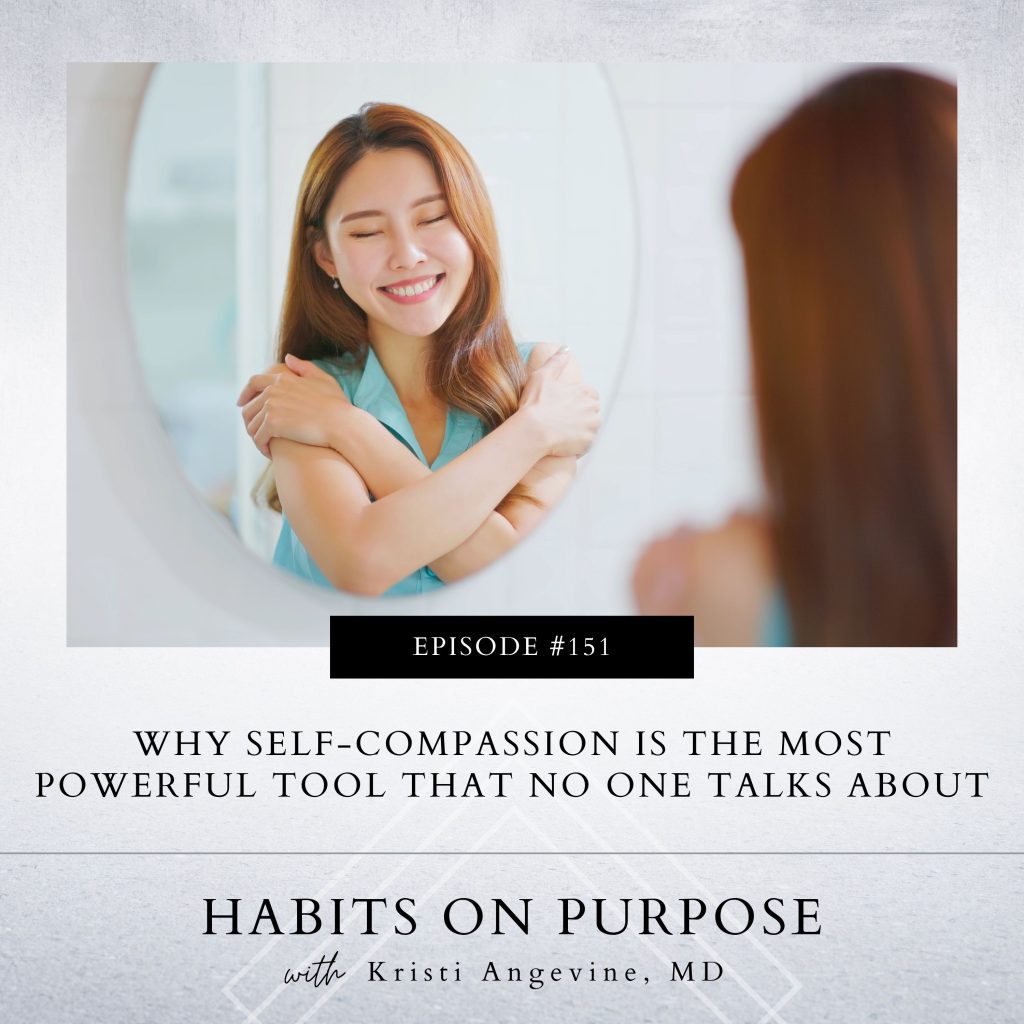
Self-compassion gets a bad rap. Many people seem to think it stands in direct opposition to pushing yourself to do your best, that it’s about making excuses, and that it’s self-pitying. But I’m here to tell you that self-compassion can actually enhance excellence—if you’re doing it often enough.
To begin this journey of being kinder to yourself, I’m first exploring and defining compassion. To help, I’m pulling from a couple of my favorite minds. From there, we can properly treat self-compassion as the powerful tool it truly is.
So listen in as I explore this fascinating concept, including how we’ve been socialized to believe it’s some sort of bad thing. I’m then outlining a simple but effective exercise to practice self-compassion. Even more, I’ll explain how engaging in it can help high achievers like us avoid self-flagellation. Let’s get started.
What you'll learn from this episode:
- The definitions of both compassion and self-compassion, with references to experts in the field.
- Why self-compassion can be a powerful tool to deploy when taking on bold goals and big projects.
- How our individualized culture has socialized the idea that self-compassion is a negative concept.
- A simple practice to start being kinder to yourself today.
Listen to the Full Episode:
Powerful Takeaways:
4:11 “The way we’re socialized in this very rugged individualist culture that prizes sucking it up, pulling yourself up by your bootstraps, has no room for self-compassion.”
6:35 “Self-compassion is a willingness to notice and be moved by your own suffering, your own imperfections and shortcomings, and to realize that they are just part of the human experience.”
7:51 “Self-compassion is not interested in a fix.”
10:27 “What if you could work hard, strive for excellence, achieve seemingly audacious goals without the self-flagellation?”
Featured on the Show:
- Leave a rating and review for the podcast here!
- If you’re interested in connecting with me for private coaching, go to HabitsOnPurpose.com/private.
- Follow me on Instagram!
- Click here to join the mailing list.
- Join HOPP small group coaching program here!
- Join the Habits on Purpose Facebook group!
- Click here to send me any questions that you would like addressed on the podcast!
- Kristin Neff
- Take the Self-Compassion Test
- Derek Scott
- Trisha Dowling: Compassion Does Not Fatigue
- Bev Aron
Related Episodes:
Full Episode Transcript:
Welcome to Habits On Purpose, a podcast for high-achieving women who want to create lifelong habits that give more than they take. You'll get practical strategies for mindset shifts that will help you finally understand the root causes of why you think, feel, and act as you do. And now, here's your host, Physician and Master Certified Life Coach, Kristi Angevine.
Hello, hello, my lovely listeners. So, as per my usual, I'm recording this episode from my home office. Which is where I coach, and the space that I use as a podcast studio. If you were here with me, you would see that behind me, which is the backdrop for my coaching calls and webinars, is this really soft blanket that I got as a gift from Bev Aron, from being in her Advanced Deep Dive Coach training.
There are some pillows, there are a variety of books on the side tables. As I look back, now there's a cup of coffee that's just sitting there empty. And, there's a couple of lamps. And then, when you scan forward in front of where the camera sees, there are more piles of books that I haven't quite found a great spot for. Because I moved some of my bookshelves out of the office and into my kids’ bedrooms, and just haven't found a great replacement for them, yet.
There's a keyboard that I keep around in hopes that maybe my kids will enjoy piano lessons. And if I'm being honest, there are some cookbooks, a box or two that I haven't gone through and unloaded and organized yet, and there is some laundry.
As I keep scanning forward, my eyes have hit my whiteboard calendar. My whiteboard calendar is something I truly love so much. It's a four-month calendar. It's where I can just glance up from my desk, and I can see the next four months all mapped out; with big events, things for my business, things for our family.
And right now, as I was sitting here preparing for this episode, I have to chuckle to myself when I look up at this calendar, because this calendar has the months of May, June, July, and August. I'm recording this now, in December, so it hasn't been updated in a really long time.
In the past, I would have been really upset with myself about this. But these days, I recognize exactly why it's not updated. Physically, I have chosen to put my energy and my efforts elsewhere, these days. And as a family, we've been really busy. So, instead of beating myself up or saying mean things to myself, I realize that filling it out truly means nothing about me as a person, a parent, or a business owner.
Which brings me to the topic of today, self-compassion. If I had heard this phrase 10 years ago, I would have instantly rolled my eyes, despite the fact that I could have used so much of it in my life. I had no problem with compassion for others. I thrived on being compassionate with my patients, but I rarely ever directed it inwards. Maybe, you can relate.
Maybe, you hear “self-compassion”, and you scrunch up your face, or furrow your brows, or roll your eyes. Or, deep down, you know it's super easy to give to others, but you almost flinch when you consider giving it to yourself. So, if this is you, this episode is perfect for you.
Self-compassion has a really bad rap, and there are lots of negative connotations. Some of those negative connotations are as follows: It's soft. It's weak. It stands in frank opposition to pushing yourself to do your best. It's making excuses. It's self-pitying, it's selfish. It's whining in disguise. It's just some trendy buzzword du jour from self-development. It's New Agey. It's something that you do at the yoga studio when there's candles and weird music and incense. And, it's really out of touch with reality.
So, I teach a self-compassion exercise to my clients, and it's one I love so much that I learned from the lovely, Megan Ladd. And you can get to know Megan a little bit better, because she was on the podcast, back in Episode 29. Before I do this exercise, I ask my clients what they think of self-compassion. Like, what comes to mind? And nearly every single time, the connotations of weakness, selfishness, self-pity, and making excuses are what comes up.
Now, these connotations make so much sense. Because think about it, the way we're socialized, in this very rugged, individualist culture that prizes sucking it up, pulling yourself up by your bootstraps, has no room for self-compassion. And then, when you take some of the other messaging that we hear, from the idea that we can do hard things; Grit is important. Fall down, get back up, keep going. Failure of currency to growth. Self-compassion can sound kind of wimpy and antithetical.
So, my assertion is that the reason self-compassion is so unpalatable, and something that many high achievers aren't yet skilled at practicing, but need to start to learn, is because it is a misunderstood entity. What, exactly, is self-compassion if we misunderstand it so much?
Let's start by defining it. One of the leading researchers on self-compassion is Kristin Neff, and she describes compassion so nicely. I'm going to basically paraphrase what she says about compassion, and then talk about self-compassion. Kristin Neff describes it as, noticing and being moved by other suffering. Such that you feel warmth and caring, and a desire to help.
According to her, it can also mean offering understanding and kindness, instead of judgment when others falter. And instead of offering pity, compassion is a recognition that suffering, and failing and missing the mark, are simply part of the shared human experience.
I also really love how Derek Scott describes compassion. He says, compassion is the willingness to witness and sit with someone else's suffering, and not need to fix it; that part's huge. The willingness to witness and sit with someone else's suffering, and not need to fix it.
So to this end, it's really worth noting that compassion is not empathy. In other words, compassion is different from imagining what it would be like to be in someone else's shoes, and literally feeling other people's feelings. If you spend your entire day feeling other people's feelings, you know that at the end of the day, you can be absolutely drained. So, while empathizing can be exhausting, as Trisha Dowling says, “Compassion does not fatigue!”
If that's compassion, let's talk about self-compassion. When you direct compassion towards yourself, well, what is that? Self-compassion is a willingness to notice and be moved by your own suffering, your own imperfections, and shortcomings. And, to realize that they are just part of the human experience.
Self-compassion is the act of deliberately meeting yourself, right where you are, with understanding, with care, and with warmth. And to echo Derek Scott's wisdom, to be able to witness your own suffering, without needing to fix it.
Now, let's talk about some of these negative connotations. Self-compassion is not self-pity. Because self-pity leads to being really self-absorbed. Where self-compassion helps you see your experience with some space, and understand that there's a broader context; that all humans experience this suffering. Self-pity sounds like, “Woe is me. It’s not this bad for anyone else. I'm totally alone in this. It’s so bad.”
But self-compassion sounds like, “Yes, I'm having a hard time, right now, but it's normal. Other people struggle like this, too.” Self-compassion is also not selfish or self-indulgent. And here's why; self-indulgence has a short-term focus. It might sound like, “Things are so stressful that I'm just going to scroll and binge Netflix®. I'm going to eat these cookies, drink this bottle of Merlot.”
Self-compassion is not interested in a fix. Self-compassion sounds like, “I noticed a part of me is so stressed, right now. Anybody in a similar situation would probably feel distressed. What I think I really need is reassurance and a good night's sleep.” Can you see the difference?
Self-compassion is also not the same as making excuses. And as such, it's not a roadblock for striving for excellence in all that you do. In contrast to what many of you might think, self-compassion is not a one-way ticket to mediocrity. Rather, it's one of the most powerful tools you can deploy, in order to take on bold goals and enormous projects.
Think about it. When you give yourself compassion, understanding, patience. And, when you're not urgently scampering around trying to fix how you're feeling. When you see yourself exactly where you are with a kindness that appreciates your common humanity. Then, on top of whatever your original painful experiences, you don't also feel rushed, or judged, or discouraged, or alone.
You help yourself feel seen, heard, reassured, and understood. And when you feel seen, heard, and reassured, when you have a sense of understanding directed towards yourself, it is so much easier to get back up. To dust yourself off. To keep going. To keep striving for a particular goal that you have for yourself.
I would be remiss if I didn't point out that these emotions that are possible when you direct self-compassion towards yourself, they're ones that you actually create for yourself directly. From how you talk to yourself, and by the things that you are thinking.
So, I'm imagining some of you are saying, “But Kristi, if I stopped telling myself that I need to do better; that I suck. What the hell's wrong with me? I have to work harder to get this done. There's something wrong with me, so I better hustle to make up for it. If I stop telling myself that and stop pushing myself, I'm not going to work as hard or be as productive. The very reason that I've gotten to where I am today, is because I have pushed myself like this.”
And to this, I say, what if your hard work, your excellent work ethic, and your productivity has occurred despite you telling yourself these critical sentiments, not because of it? What if you've gotten to where you are today despite these critical sentiments? What if you could work hard, strive for excellence, achieve seemingly audacious goals, without self-flagellation? And, what if you could do it with so much more ease, if you tried on self-compassion, instead?
You know how I like to keep things really tangible. So, I want to give you something that's concrete, that you can do right now. And I recommend you do this every day this month. Part of this exercise was inspired by a dear friend of mine when she sent me a text, and the phrasing and the text just really resonated. So, you know who you are. Thank you so much.
Here's the exercise: You say to yourself, “Fact: ‘blank’ is hard. Of course, I'm going to feel ‘blank’. I'm not the only one who would feel ‘blank’ in these circumstances. If a friend came to tell me this, I would tell her ‘blank’.
Let me fill this in, so it's not a bunch of confusing blanks. You start off with, “Fact: Feeling embarrassed is hard.” “Fact: Parenting is hard. Juggling work and home is hard. Seeing someone I love be grouchy is hard.” “Fact: Getting a negative patient review is hard.” You say, Fact: and you fill in whatever you're going through right now that is difficult. " And you just acknowledge this, “What I'm going through right now, this is hard.”
Then, the next part is, “Of course. Of course, I'm feeling ‘fill in the blank’”. “Of course, I'm feeling stressed.” “Of course, I'm feeling discouraged.” “Of course, I'm feeling alone.”
And then, the next part, “I'm not the only one who would feel ‘whatever I'm feeling in these circumstances’.” So, “I'm not the only one who would feel like this in this situation. I'm not the only one who would feel discouraged after a negative patient review.”
And then, the fourth part, “If a friend came to me with this, I would tell her,…” I would tell him, I would tell them, “‘It's okay that it feels like it's not okay right now, but I promise it is.’” “I would tell her, ‘I totally understand. And I'm so sorry, this is hard.’”
So, let me go over this again. What you do is any time you notice something is really difficult; a difficult emotion, feeling triggered, feeling stressed, noticing you're overwhelmed, behind on your charts at work. Anytime you find yourself second guessing you're beating yourself up, do this exercise. Say, “Fact: What I'm going through right now is hard. Of course, I feel how I'm feeling. I'm not the only one who would feel this way in these circumstances.”
If you want more background in a way that you can enhance this type of technique, I really recommend that you go listen to the narration technique I talked about in Episode 4 of the podcast. And then, if you want to get a really objective measure of your own self-compassion, I'm gonna link in the show notes, a website you can go to.
So, you can take one of the most well-known, well validated self-compassion scales. It's the one put together by Kristin Neff and team, and you can find her self-compassion scale at self-compassion.org That’s self-compassion.org/self-compassion-test.
It's a little bit of a tongue twister, so you can go to the show notes. You can find it there and try the exercise I shared here. Try it every day, anytime you notice anything difficult, and if you consistently do it, it has the potential to change your relationship with yourself. And I’ll see you in the next episode.
Are you on the Habits on Purpose email list yet? I send community emails with practical information, habit change tips, and announcements about workshops, lectures, and in-person events that I'm going to be attending. I share things that I don't share here on the podcast, and I let you in on what I'm studying, what I'm learning, and what I'm going through in my life.
When you're on the list, you can always press “Reply” and ask me a question. And you'll hear back from me; not from my team, not from AI. You'll hear back from me.
So to connect in your inbox. Go to HabitsOnPurpose.com and join the email list. You can also find me on Instagram and Facebook. And get ready for it, eventually … gasp … you will find me on TikTok once I actually open an account.
Take care, and I look forward to connecting.
Thanks for listening to Habits On Purpose. If you want more information on Kristi Angevine or the resources from the podcast, visit www.habitsonpurpose.com. Tune in next week for another episode.
Enjoy the show:

