
For high achievers like you, there’s always room for more productivity hacks. After all, the pursuit of productivity is an ongoing journey, not a destination. Embrace what works, and let go of what doesn’t. Today, I have a feeling you’re going to jump at the opportunity to put new productivity tools in your toolbox.
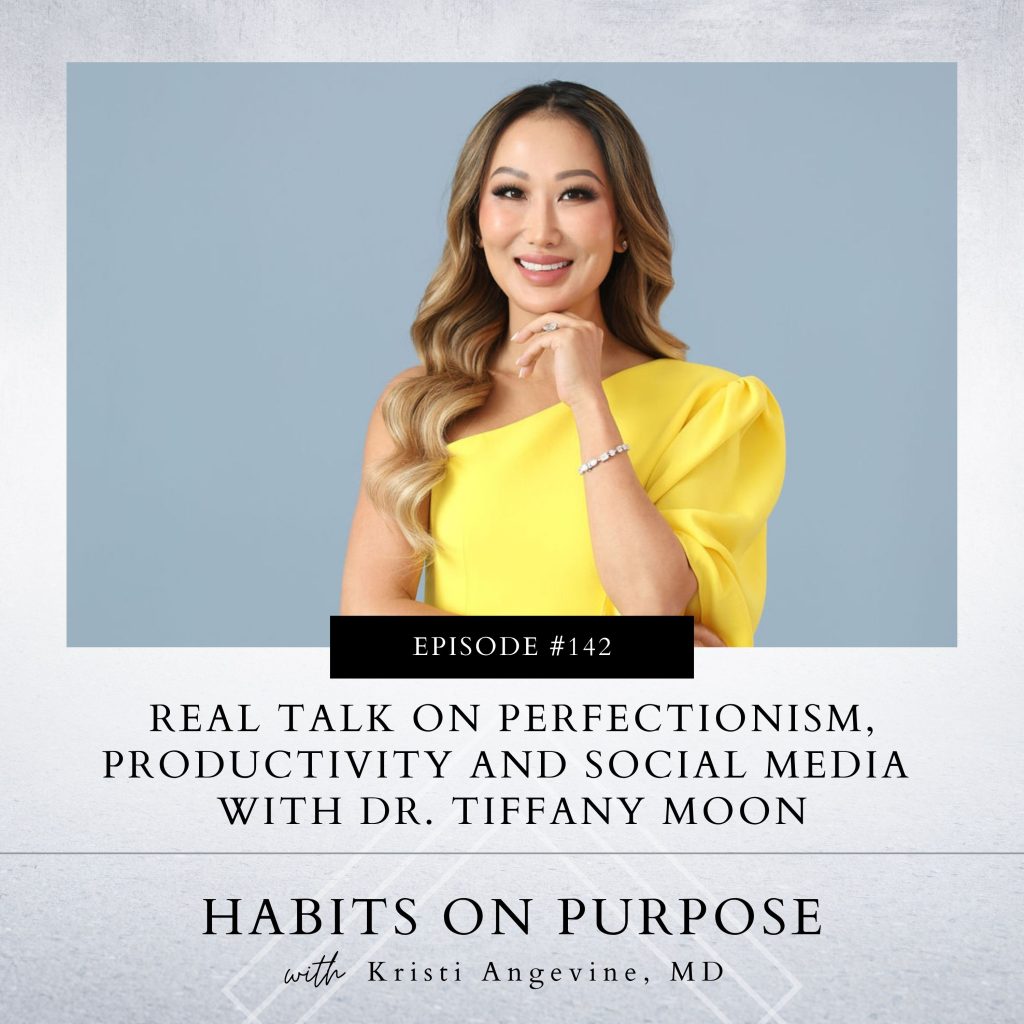
That’s because today I’m talking with an expert. Dr. Tiffany Moon is a board-certified anesthesiologist, the CEO of the LeadHer Summit, a mother of twins, and a television and social media personality. She’s here to share a little about her background and outline her approach to achieving productive outcomes in each of her passions.
Listen in to learn tips such as outsourcing tasks on your to-do list that you don’t genuinely enjoy doing, managing your calendar to include time for self-care and nourishment, and giving yourself permission to procrastinate. We’re also diving deep into social media and how to use it effectively after establishing the proper expectations.
For high achievers like you, there’s always room for more productivity hacks. After all, the pursuit of productivity is an ongoing journey, not a destination. Embrace what works, and let go of what doesn’t. Today, I have a feeling you’re going to jump at the opportunity to put new productivity tools in your toolbox.
That’s because today I’m talking with an expert. Dr. Tiffany Moon is a board-certified anesthesiologist, the CEO of the LeadHer Summit, a mother of twins, and a television and social media personality. She’s here to share a little about her background and outline her approach to achieving productive outcomes in each of her passions.
Listen in to learn tips such as outsourcing tasks on your to-do list that you don’t genuinely enjoy doing, managing your calendar to include time for self-care and nourishment, and giving yourself permission to procrastinate. We’re also diving deep into social media and how to use it effectively after establishing the proper expectations.
What you'll learn from this episode:
- How to overcome perfectionist tendencies to promote productivity in every facet of life.
- Why taking a moment to stop and focus can reduce procrastination.
- Ways to be more productive, including outsourcing tasks that don’t bring you pleasure.
- How to establish expectations on social media so you don’t fall into the trap of tying self-worth to it.
Listen to the Full Episode:
Powerful Takeaways:
10:53 “Becoming an entrepreneur and of course, a mother really taught me to let go of perfectionistic tendencies.”
18:52 “ Just like exercise and sleep, coaching is hydrating. It’s just an effective thing.”
19:33 “Look at how you’re spending your time and figure out some tasks that you are doing that you don’t enjoy doing and outsource it.”
23:45 “Social media is a tool. Like any other tool in your arsenal and you choose how you get to use that tool.”
28:02 “I decided that what people say about me often times has very little to do with me. And I think it really actually helped strengthen who I know that I am.”
Featured on the Show:
- Leave a rating and review for the podcast here!
- If you’re interested in connecting with me for private coaching, go to HabitsOnPurpose.com/private.
- Follow me on Instagram!
- Click here to join the mailing list.
- Join the Habits on Purpose Facebook group!
- Click here to send me any questions that you would like addressed on the podcast!
- Dr. Tiffany Moon: Website | Instagram
- LeadHer Summit, November 8-10, 2024
Related Episodes:
Full Episode Transcript:
Welcome to Habits On Purpose, a podcast for high-achieving women who want to create lifelong habits that give more than they take. You'll get practical strategies for mindset shifts that will help you finally understand the root causes of why you think, feel, and act as you do. And now here's your host, Physician and Master Certified Life Coach Kristi Angevine.
Hello. Hello everybody. Welcome to this episode. I am so excited that we get to dive in and have another conversation episode. If you're new to the podcast, this is going to be a delight. If you are a long-time listener, I'm so glad you're back.
My guest for today's episode is Dr. Tiffany Moon. Dr. Moon is a board-certified anesthesiologist. She's the CEO of the LeadHer Summit, and she's an entrepreneur in general.
She's a mom of twins. She's a television and social media personality. And she really loves sharing her path, her journey, her lessons with over 2.5 million followers on social media. She’s had over 50 peer reviewed publications. She's received multiple grants and research awards, and she's an oral board examiner for the American Board of Anesthesiology.
So we recently met in person, we chatted, and very quickly I knew she would be a great interviewee for the podcast. Her latest initiative is the LeadHer Summit, and you're going to hear her talk about this, but I want to plant the seed for you now.
This is a conference that will take place in Dallas, Texas, coming up here November 8th-10th, 2024. So if you're listening in real time, it's coming up very soon. This conference focuses on empowering women in law, business, and medicine.
You're going to get to hear all about why she created it and who it's for. And I'm going to be attending, so I'm very excited. If you have time in your schedule and you want to get away for a weekend, and you're intrigued by what you hear, please come join me there.
Now let's get started.
Kristi Angevine: All right, the lovely Dr. Tiffany Moon, welcome to the podcast. It's so fun to have you here.
Tiffany Moon: Thank you for having me.
Kristi: For the people who are listening and they don't yet know you, can you just introduce yourself?
Tiffany: Sure. I'm Dr. Tiffany Moon. I'm a board-certified anesthesiologist, mother of twins, entrepreneur, author, keynote speaker, former reality TV show personality and social media influencer.
Kristi: That's great; a lot in 10 seconds of a soundbite. Said like a pro.
Unless somebody has entered the world of reality TV, you are most definitely the first reality TV personality we've had on this podcast, how fun.
Tiffany: Oh goodness. Your listeners are click, skip to the next episode. Give me a chance, people.
Kristi: So where are you calling in from?
Tiffany: I'm calling in from Dallas.
Kristi: Dallas is actually where we met. I was thinking back on this. I first heard you speak, I think, in 2023. I think that's my first time that you sort of entered my sphere of consciousness. But we quite literally met a few weeks ago in Dallas, at Peter Kim's Passive Income MD conference; which was such a fun event.
I just love that we get to chat a little bit more and kind of invite other people into this conversation.
Tiffany: Yeah, I'm excited.
Kristi: Correct me if I'm wrong, but you strike me as an open book. And if you're comfortable, I would just like to ask, what is something that somebody who does follow you on social media, what's something that they might not know about you?
Tiffany: I would say that I'm an introvert, and I'm really not all that glam. I think when you follow me on social media, it looks like I go to a lot of parties and charity events and vacations and things like that. But as you can see right now, I'm in a t-shirt and a sweater that I've had for 10 years, with hardly any makeup on.
So I guess the lesson here is that what you see on social media is sort of what someone selectively decides to put out of their life. It's not necessarily an accurate representation of their life as a whole. Like, did I do all those things on my social media? Sure I did, but I don't post about me having Zoom meetings all day or me spending time with my children and all that.
What you get is sort of what someone chooses they want to show you. Which is why people should not compare their lives to what someone else's social media feed looks like.
Kristi: Totally the curated version versus actual, authentic reality. That's so interesting. I definitely wouldn't have pegged you for identifying as an introvert. I think of it like a spectrum, right? There are places where I'm more introverted. There are places where I'm more extroverted. But, for sure, I would say my default is to be an introvert. I wouldn't have known that, so that's so cool to know.
Tiffany: Yeah. At conferences, it's always really hard for me to strike up conversations with people. So I really like it when somebody like Sunny Smith is like… She'll be talking to someone and she'll be like, “Hey, this is my friend Tiffany. She does X, Y, and Z. She's putting on a conference. You guys should talk.”
And I'm like, oh, thank God. Cause I just can't be the type of person to go up to random strangers and introduce myself. I just can't.
Kristi: That initiation portion, I think some people are really skilled at. I have friends that are coming to my mind right now, who they're just great with that. That is just like breathing for them. There's no problem at all. No angst.
It takes my energy level down to do that. And so it was great when we just happened to be sitting next to each other and to just naturally be able to talk. Yeah, I totally get that.
Tiffany: And then of course I talked to you about purses. That was the first thing I told you. You're like, “Uh, this chick is weird.”
Kristi: No, that's so interesting. That definitely was not what I was thinking, at all. I think it's just so fantastic that we both have the mental and emotional space to be so different. Because I don't know anything about purses. Sunny Smith and I probably have more in common, in terms of our knowledge based on fashion purses, than you and I ever will have. And I think that's really fun. It's just so fun to have room for all these different interests.
Tiffany: Yes, I agree.
Kristi: So as I was thinking about some things that I would love to pick your brain on, that I know my listeners would really find useful, the main focus that I came up with would be for us to touch on productivity and social media, two areas that I think you're quite an expert in.
But before we do that, I selfishly… like we were talking before we started recording, these podcast conversations are kind of a way for me to be able to chat with people that I would love to chat with and just realize anyways, but also let other people get in on it. And I would love to get to know you just a little bit better. And then let the listeners know you sort of as the person.
So what I have learned from the world of social media, and from things like that, is that you are quite busy. You do a lot. So anesthesiologist, you said mom of twins, business owner, so much social media involvement and expertise. You speak all over the place. And you're putting on a conference coming up really soon, which we're going to talk about momentarily. I'm curious, what drives you to do all the things that you do?
Tiffany: That's a really good question. I would say, I used to be really driven by perfectionism and the need to prove myself and gain achievements in order to feel worthy. That changed for me, I would say, about four to five years ago.
And now I'm really driven by motivation to show my girls what a woman can do, and all the different hats she can wear. Sort of let go of the constraints that society tries to put on us to step outside of the box and do different things. You know, being a housewife or being a social media influencer. These are not things that people would think of when they think of board-certified doctor, you know?
But I'm like, “But why can't we? Where's the rule that says that we can't be this and that, and we always have to choose this or that?” So now it's sort of just kind of living my own life authentically the way I want to, and showing my daughters that you really can be anything you want to be, even though that sounds a little bit trite.
Kristi: I think we can use this as the permission slip, for anybody listening to this, who maybe is still struggling with some of those things that are now in your past, but it really is possible. It may take some work to get to that place, but you really can just be things… Even if there are societal rules in your mind that say you can't. So I love that you're modelling that for your kids.
It gives me goosebumps just thinking about that, that they get to have that as the messaging that they're sort of marinating in through their childhood. How old are your twins?
Tiffany: Oh, they're 10.
Kristi: I'm curious. You mentioned having perfectionism in your past. What's something that you struggled with, as a physician business owner mom, as you were kind of unpacking some of that?
Tiffany: Oh my gosh. I mean, throughout my childhood, young adulthood, everything had to be perfect. My grades had to be perfect. I had to look perfect. I don't even know where it came from, to be honest, if my parents kind of brought some of it on myself or it came from an internal source. But this was the kind of thing, like if I got a 95 on a math test, I'd be like, “Oh my God, what did I miss? That's such a stupid problem. I can't believe I missed that.”
I would berate myself about it; just giving myself absolutely no grace as a human being to make mistakes. And then choosing anesthesiology as a career, which is very regimented. You don't make mistakes in anesthesia. Somebody's life is on the line. And so it's sort of like going into a career in anesthesia reinforced those concepts that I have to be perfect. I have to be perfect.
And it really wasn't until I became an entrepreneur in my mid-thirties that I started to be like, “You know what? It doesn't have to be perfect.” The first website I ever put out… It's so embarrassing… but when I look at it… Or like my candles. The first labels that I ever put on my candles, I literally printed from my inkjet printer. They were from Avery; you print them and stick them on the glass.
I think it was becoming an entrepreneur, and of course a mother, that really taught me to let go of my perfectionistic tendencies.
Kristi: Oh, that's so good to hear. I think some people who really feel like they're in that straight jacket of perfectionism just think that that's how it has to be, because it's sometimes hard to see the light. And I can totally relate to what you said about looking back and being like, wow.
As soon as you enter the world, media is a little bit different than medicine, and being an entrepreneur, it's almost like if you're going to survive, you kind of have to unravel some of that perfectionism. Otherwise you're never going to get anything done.
All right. Let's talk productivity. This is something that I've seen you talk about, I've seen you coach people through, and sort of give people information about. And I don't know about you, but I find there's this fine line between productivity and being this frazzled, harried complete mess, where you're just going and going and going on this hamster wheel.
Tiffany: I may be the latter right now, just to preface this.
Kristi: And so this is really good. That's perfect, because I think sometimes when we talk about productivity, people are like, “Ooh, I want all the tips. I want all the information. Because this person, they've got it all figured out and they're always in that world to figure it out.”
And I always try to be transparent with people. Even the things that I teach, the things that I coach people on, the reason I know about them so well is because they're things that I've struggled with intimately and I'm still working on.
So welcome to being frazzled and harried right now. That's fine.
I find people do a lot of their productivity at their own expense, right? They go and they go and they go; the underbelly of lack of self-care. And sometimes they tie their worth to their productivity. Like, “I only matter if I'm being productive.”
And especially, I think this is meaningful coming from where you are right now, if you're feeling like you're in that group, of feeling like you're kind of running around like a crazy lady. What do you do to balance out being productive, and also nourish yourself when you're in the season where you can do that?
Tiffany: I would say blocking out time for self-care is really important. I never used to do that. But I'll put holds on my calendar, on the weekends, for journaling, meditation, sometimes yoga or workout class, or just a walk. I used to fill every single minute of my day. And now, I mean, I probably still do, but some of it is blocks that I'm doing for self-care, you know?
And then, the other thing is, I live and die by my to-do list. But some days I look at it and I'm just like, “What really needs to get done today?” And being able to really prioritize. Because sometimes, for whatever reason, we do the easy thing so that we can check it off and it feels good. You get that little dopamine hit or something.
But I'm like, “No. What really, really needs to get done today? What fires need to be put out?” And if I don't have the bandwidth for it, everything else can wait until tomorrow.
Kristi: Is there anything that's hard about that for you? Like focusing on what's actually essential as opposed to the things that seem important?
Tiffany: Yeah, it's hard. Because some things seem important to me, and I really want to get them done, but I'm like, “Actually, this other thing needs to take precedence.” It's weird. I always avoid the things that I know need to be done.
I'm giving a talk next week and they're like, “Can you turn in your slides?” And I'm like, “No, I cannot, because they're not done. They haven't even been started, so I can't turn them in.” I don’t know why we drag our feet. Because I know that I need to make slides, and I know that I'm going to make them. But just not until, probably, the plane ride on the way to the conference, you know what I mean? It's this stupid form of procrastination.
Sometimes I just have to take a step back from it all. Because I think when you're in the eye of the hurricane, you can't see everything around you.
Kristi: Yeah. I think this is going to be so validating for people to hear. Because I think there's almost this idea that people who've got it figured out, they do things a certain way. Like they're never late on a deadline, and they know how to pull themselves out of the eye of the hurricane.
It's like, “Well, we could just normalize that.” Normal humans sometimes operate on… have a different sort of timeline for doing things in a different rhythm. And that's okay.
Tiffany: Yeah. And not to beat yourself up over it. Because what does that do? If the voice in your head is like, “Oh, I'm so dumb. I can't do this,” that is not serving anyone.
Kristi: I'm curious. Do you notice that voice for yourself? Or is it something that you're getting better at noticing it?
Because I know for me, I notice it way better now. Some of my most critical parts, they've retired. They're not there anymore. I notice it better now than I used to. And yet, still, sometimes it will be there and I won't even notice it. I'll look back and I'll be like, “No wonder I felt so whatever last week. I was beating myself up.”
Tiffany: No, I think I've been more cognizant of that voice in my head ever since I started coaching. I'll talk to my coach, I'll say something, and she's like, “Is that true?” And I'm like, “Well, it's true to me.” And she's like, “But is it really true that you have to do something or if this doesn't happen, then you're a failure?” And I'm like, “Well, I guess not.”
I think after being coached for so long you start to coach yourself, you know? And so you'll get this little feeling of doubt creep in or something, and you'll be like, “Wait, is that actually true or am I making up a story or something?”
Kristi: So, yeah, I have that same experience, of just sort of getting coached so much that you start thinking in that way yourself and can catch yourself so much more quickly.
Tiffany: Yeah, I think everybody needs a coach. It's so funny. I did this leadership class at my work, where they select some early-stage assistant professors and nurture them and you do this capstone project and all that.
And they were talking about as part of this you get free executive coaching. And I was like, “For what? I mean, what do you need a coach for? I don't get it. That's all woo woo stuff for people who can't be leaders or don't know how to communicate effectively or whatever. They're the ones…” No, I'm serious. This is how I thought.
Kristi: I'm laughing because I had those same thoughts.
Tiffany: And I was like, oh, it's those woo woo coach people. That's so bogus. And then, come 2024, I started coaching with Sunny. I made her be my coach. She was like, “I'm not taking private clients right now.” And I was like, “No, you have to help me. You're my guru. And she was like, “Oh, Lord.” Anyway, I started coaching.
And now, as the pendulum swings, I've gone to the other side and I literally will go to conferences, talk to women, whatever, and I'm like, “You need a coach. You need a coach. All these problems you're having? You need a coach.” So I went from coaching as woo woo and for crazies to every single professional woman needs a coach.
Kristi: I did the exact same thing. I mean, I think I pulled a muscle in my forehead by rolling my eyes at how dumb I thought coaching was and how it was super elitist.
I love that you mentioned coaching was for people who just don't know how to communicate. It's almost like a remedial class to walk you through the basics. I'm going to call it “executive coaching”. I'm doing air quotes here for people who can't hear my voice; we're doing “executive coaching”. Which means we're going to take you, somebody who just doesn't know how to interact with humanity, and we're going to teach you some basic things and make you pay a lot of money for it, or charge your organization lots of money for it.
Tiffany: Yeah, exactly. I had the same thing.
Kristi: I do love that there are now… I mean, the field of medicine in particular, it’s a little bit behind on being open to the actual benefits of it. Because other industries have been doing it for years. It's just sort of part of their approach. But it's so nice to see that it is more normalized now.
And even for those of us who looked at it sideways, we are like, “Oh no, it's actually just effective.” I mean, it's just like exercise and sleep and hydrating. It's just an effective thing. It’s a tool in your toolbox.
And yeah, if you didn't have it, you would wish you did once you’ve experienced it, right?
Tiffany: Yeah, exactly.
Kristi: All right. Let's talk productivity just a little bit more. Because I love that you normalized it. There's lots that goes into that. What are some of the things that you see people around you struggling with that you've kind of figured out?
If somebody is listening to this being like, “Yeah, it's great. Tiffany's got this figured out, and she can say that she's running a little behind, but she still has it figured out,” where could somebody start if they want to get a little bit better handle on things?
Tiffany: I would say look at how you're spending your time and figure out some tasks that you are doing that you don't enjoy doing and outsource it. And then this is where, when I have my coaching clients, I'll get the pushback. Like, “Well, how am I supposed to…? We can't all have full-time assistants like you. How do I find someone? How do I trust someone inside my home?” All those… excuse after excuse after excuse.
And I'm like, “Nope, this is what you're going to do.” You're going to list all the things that you do: Make school lunches. Order things for Halloween decorations. All the things that you do. You're going to circle five of them and then find somebody to take those tasks off of your list.
Because you have too much to do. I don't care who you're outsourcing it to, your husband, your children, the nanny, a part-time assistant. That's like a high schooler who wants to make some extra money. For me, when I did this exercise five years ago, I was wrapping presents. I freaking hate wrapping presents.
At Christmas time, we always host at my house. And so it's my in-laws, my parents, my brother, his girlfriend. There's like 20 people in my house, and I have to have gifts for all of them. I'm spending hours wrapping presents. And you have this vision of, ‘Oh, it's jolly. There's Christmas music playing and I'm sipping hot chocolate.’ No, I'm drinking wine and cussing everybody out as I'm taping these presents together.
And it all looks terrible. I'm like, “Why am I doing this?” So I went on this private mom Facebook group for our neighborhood, and I was like, “Hey, does any high school or college student want to make a little cash for Christmas? Paying…” I forgot what it was, “15 bucks an hour for you to come to my house on Saturday afternoon and wrap presents for four hours. And I got all these responses, like 20 responses.
And I was like, oh, I just outsourced that. It was so easy, and I felt good doing it. And the person was happy to make an extra buck. And I was like, “That wasn't so hard now, was it?”
I looked at the rest of my list, and I was like, “I'm not making lunches for school anymore. I'm not ordering decorations or buying the teacher flowers for the teacher's birthday thing. I can't like the mental space that it takes up,” you know? My husband never does any of that stuff. He doesn't even know any of that stuff because I take care of it. I just decided, “I'm not doing this anymore,” and I outsourced it.
Kristi: I think what you just said is so powerful. That you just decided. You made a decision. You did an inventory, or you took kind of an audit for, “Okay, what fills up my cup and what is just soul sucking to me?” And I think a lot of people stop there. They're just like, “Yeah, it's all terrible.”
But you made a decision and then you executed on that decision, and then got to see the benefits on the other side, which I think that's really key, is actually deciding.
Tiffany: Yeah. That really is the key. Because in your head, if you're like, “No, I have to be the one to bake cookies for my kid to bring them to their class party.” I'm like, “Why? Who said that?” And you're like,” Oh, I don't know. All the other moms bring home baked cookies.” I'm like, “No, go to Central Market, or whatever grocery store you have, buy that stuff, put it on a homemade plate, and all of a sudden those are homemade cookies.” I don't care, just make it happen. But you get to decide, you know?
Kristi: Yeah, I love that. It makes me think of one of those questions that always helps me so much whenever I'm thinking, “I have to do this. This is the way it needs to be.” I just ask, “According to whom? Who says?”
Tiffany: Society.
Kristi: And if it’s society, do I want to continue with that? Does it serve me? Does it feel good or does it feel awful? And therefore I want to write my own script.
Okay, can we take a big turn and talk about social media? I mean, I know they're connected, right? Productivity is going to be connected, I'm sure. I want to know why you are passionate about it?
Tiffany: I just think it's such an easy way to spread your ideas with the world. Before, in the olden days, before smartphones, if you wanted to share an idea or find a group of like-minded people to collaborate with, it was kind of hard to do.
But I always say social media is a tool like any other tool in your arsenal, and you choose how you get to use that tool. And I love it because it allows me to connect with people that I never would have gotten to connect with. And then I get to share my ideas and be creative.
Because, as we all know, anesthesia is not a particularly creative specialty. I kind of go to work and do the same thing every day. It just gives me an outlet to showcase another side of my personality that I don't normally get to showcase.
Kristi: As I'm thinking about this, I've got a couple of people that come to mind that talk about some of their angst when it comes to social media. And what I mean by their “angst” is they're high achievers and they've got all those things that you talked about before. They're struggling with perfectionism, with fear of failing, and lots of overthinking.
And when they think about using social media either for educating their patients or for connecting with their community in a different way, or for building their business, when they think of that, one of the reasons they don't take advantage of it is because they have this really visceral fear of being seen, evaluated, judged, and then rejected, and possibly causing more harm than good. I'm wondering if you could just talk to that a little bit.
Tiffany: Well, any time you decide to put yourself out there, right? Which is exactly what social media is. You will be seen, judged, rejected. Go ahead and put it in your head that that is the expectation.
That way, when it happens, you're not like, “Oh my God, they don't like my post. People are talking about me,” or whatever. Who cares? Because it's generally just a few trolls that sort of take the time to comment or say something nasty. But the people who you helped reach or who liked your thing, or it gave them a little extra pep in their step, a lot of times they don't tell you that.
So you get this negativity bias when you start posting on social media. I think it helps to go ahead and set the expectation that not everything you put out there will be liked by everyone who sees it. Like, duh, do you like everything you see in every person you come across? No, there are some people who ruffle your feathers and some people who you relate to and follow and interact with or whatever.
And it's just like regular life. You choose to gravitate and hang out and interact with the people who speak to you and block everyone else. And people are like, “Oh, that's not realistic.” Well, what's not realistic is somebody in my life who would come say this stuff to my face. That's not realistic either. So we're already playing in an unrealistic world.
I just give people freedom. I'm just blocking, deleting. Don't pay it any mind.
Kristi: Yeah, that's so good. I love that you just say, “Let's just set the expectation,” instead of being like, “Ooh, this thing I'm really nervous and scared about…” Just be like, “No, no, that's just how it is. That’s just reality. And now, how are you going to show up, if your goal is to actually show up knowing that of course that's going to happen, but it doesn't necessarily mean anything about you?”
Tiffany: Right. Yeah. It's easier said than done, but I always say try not to take it personally. And they're like, but it's personal. And I'm like, meh, it is or isn't. Sometimes a lot of what people say has more to do with them than it does with you.
Kristi: For sure. If you can get to that place where you've got that perspective, you're like, “Oh, this is really revealing a little glimpse into their world, not necessarily about me. It's about, perhaps, what I think they think about me. Or what they might think about me…” but who actually knows, right?
Tiffany: Who knows? And it doesn't matter. Those are not your people. Find your people. And those are not your people.
Kristi: It’s just so clarifying for some people just to be like, “Oh, this could be a way to find my people. And if it helps just one person by seeing this, who I never hear from, it's worth it.”
So you’ve mentioned, and I've heard you talk about this before, your personal experience with haters, with trolls, with receiving negative comments. And you kind of alluded to this, but I wonder if you could flesh out a little bit more? What kind of mindset or belief has helped you kind of just navigate this and keep showing up? It's not like you're like, “Oh, I used to do social media.” You still do this really regularly. What helps you with that?
Tiffany: I used to care a lot. People would say mean things to me and I'd go in my room and cry or something. One day, I just decided that what people say about me, oftentimes has very little to do with me. And I think it really actually helped strengthen who I know that I am.
For example, if you are insecure about your looks or about your weight and someone on social media is like, “Oh, you look fat. You're ugly,” something stupid like that, you don't feel good about those things. You're like, “Oh, maybe I am fat. Maybe I am ugly.” They're just picking at you, you know?
But I decided that I'm happy with my body, whatever size it is. Sometimes I'm skinny. Sometimes I'm a little extra fluffy, whatever. I like the way I look. Sometimes I have a wrinkle or a pudge or whatever. And I feel good about my body that way.
When somebody says something like, “You're ugly,” or sometimes I get, “Oh, you shouldn't be wearing that,” kind of comments, I'm like, “No, I feel good in this and I should wear whatever I want.” Who are you, again? One comment can go so differently because if you feel insecure in your body and someone says something like that, you're like, “Oh, maybe I shouldn't wear it. It's too revealing…” or something like that.
And then the very same comment, as long as you have a strong mindset and you've already decided for yourself, it literally rolls off your body like water on a duck's back, you know? So you get to decide the comment doesn't matter, how you feel about it is what matters.
Kristi: This just makes me think of how we talk about how being an entrepreneur is one of the fastest ways to personal growth. Because you're either going to quit, or you're going to find all your growth edges and find all the things that are tender to explore.
And it makes me think that in being an entrepreneur, if you're going to choose to do social media, it might be useful to think about it as this is a very specific way to find the things inside me that perhaps needs attention. Because I'm going to know those things. And we would call this, in IFS, a “trailhead”.
If I read a comment, or if I have angst about posting, okay, how come? Oh, because there's something inside me that is helping me see better. So how cool. Go do all the things, and see what comes up. And then, when you can get to that place like you're talking about, where you're just like, “Oh, my sense of self-concept is so sturdy,” it's like things just bounce off.
And I'm like, “Oh, interesting you would say that. You must be mistaken, because my outfit is fabulous.” I love people who are kind of like personal development junkies. They're like, “I just want to learn about myself and do all these things.” Great. This is a way. Start being open to these things that you haven't done before on social media.
Tiffany: Yeah. It can really be eye opening, honestly.
Kristi: Yeah. I totally agree. I'm curious. You’ve mentioned coaching, and it sounds like you've done a lot of your own personal work to understand yourself and to get to a place where you are able to keep doing the things that you want to do.
I'm wondering if there's something that you know now that if we could get in that time machine and go back to you in your twenties or you in your teens, is there something that you would tell yourself? When you look back, you're like, “I sure wish I'd known that”?
Tiffany: Oh yeah. I mean, I guess just that you don't have to be perfect. Because when I was younger, I wanted to be perfect, and it kept me from trying a lot of new experiences. Because when you're new at something, you're probably going to fail and make a mistake. So I just didn't do anything. I didn't play any sports, didn't join any clubs. Because I was like, “Oh, I don't know about that. They'll make fun of me,” and whatever.
And it just held me back from having so many more experiences than I could have had. I only did the things that I would be good at, which wasn't many things other than studying. And then, once I figured out that I don't have to be perfect, I was like, “Oh, let me try that. Oh, Real Housewives? Sure, I'll try it. Try standup comedy? Sure, I'll try that. Be an entrepreneur? Why not?
It opened up my life to so many different colors than if I had stayed in that mindset of needing to be perfect all the time.
Kristi: Yeah. The you of middle school, medical school, would you recognize the you of today?
Tiffany: Absolutely not. She's a completely different person.
Kristi: It's so fascinating and so amazing to think about, right? Especially to think about your girls, growing up with this as a role model. It’s just sort of a normal space for them. It's amazing.
Tiffany: Yeah. They think I'm crazy, but…
Kristi: Our kids are allowed to have their thoughts, right? All right, so I want to talk about your upcoming conference. I'm super excited. So I met you and now I, here in a few weeks, I mean, in a month or so, I get to see you again. Because you're doing the… Tell me if I'm saying it right… the LeadHer Summit. And it's November 8th-10th in Dallas.
Can you just tell the listeners about it, and maybe who it's designed for?
Tiffany: Yeah, I would love to. So LeadHer Summit became an idea in my head in February of this year. Because I knew that I was turning 40 this year and I just wanted to do something different. And I thought about the last five years of my life as an entrepreneur and just was overwhelmed with gratitude by the number of women who had helped pave the way for me.
Because I didn't know what I was doing when I started out. First, I had a wine company. Then I had a candle company. And then I started doing social media paid partnerships and things like that. And every step along the way, when I didn't know what was happening, I would reach out to somebody.
I’d reach out to my lawyer and be like, “Do I need an LLC or should I do a S-Corp? This company wants to pay me $3,000 for a TikTok? Is that good? Should I ask for more?” You know, just all these little things. I have so many amazing friends and they all have different areas of expertise.
I was like, “What if I make a conference and I invite all my friends to be speakers and they do a 15-minute Ted Talk on their area of expertise and we all learn from each other?” And the whole thing is glam and luxurious, because, you know, it's me. We’ll have a gala on Saturday night. And you know what? I'll give away a Birkin Saturday night because that's exciting. I've never been to a conference where someone gave away a Birkin.
This literally was like brain dump, verbal diarrhea. If I could have a perfect conference, what would it look like? I literally like wrote all this stuff down. And then I was talking to my coach and she was like, “You should do it.” And I was like, “Are you kidding me? I don't know the first thing about putting on a multi-day conference.”
And she was like, “No, I feel you're pretty organized. You have lots of spreadsheets. You could make it happen.” So I started tinkering with the idea. I told my husband. I told my best friend. And this sounds crazy, but little by little, I literally piecemealed this conference together from scratch.
Kristi: Yeah, not at all.
Tiffany: This is how entrepreneurship works though. You have an idea and you can sit on it, you can hem and haw… I could have waited and been like, “Okay, not 2024, but let's do it in 2025.” But I was like, “No, 2024, it has to happen this year.”
So I called up the hotel, the events director, and I was like, “What Thursday, Friday, Saturday, Sunday, weekends do you have open after September?” Because I don't want anyone coming to Dallas in the summer. And they were like, “November 8th-10th is the only weekend that both Fall Rooms are available.” And I was like, “Cool. How much is the deposit?
Kristi: I love that you shared not only what the conference is, but sort of how it came to be. How you really can dream big and then go, “Wait a second. You mean it's actually possible? I could make it.”
Tiffany: Yeah. If I can get this thing off the ground and up and running, other people can bring their ideas to life too. People are like, “But how do you…?” You just do, just start, quit hemming and hawing. Just do the thing and then do the other thing and then learn and then call people who have done it before you.
I'm not the first person who's ever created a conference. Like, guess what?
So I called Sunny. I called Bonnie. I called Peter. Allie's helping me now. Call people who have done the things that you want to do and ask them for help. And the vast majority of them will help you. There are some though that won't, and that has been a rewarding learning experience as well. You find out real quick who your friends are and who aren’t.
Kristi: I love that you talked about asking for help, and also emphasizing just starting. We know that just starting, it's easier said than done. But sometimes when you can have that commitment to, okay, I'm going to just take the first step, starting is so much harder than continuing.
Tiffany: Yes. You can look at it, you can analyze it, you can envision yourself writing it. And it's like, girl, just get on the damn bike.
Kristi: Exactly. Which takes a willingness to screw it all up and do it messy and then come back and learn. And sometimes that perfectionism can be just huge paralysis. And then 2025 comes by and the conference still hasn't happened.
Tiffany: Yeah. I mean, if anyone is going to take anything away from this podcast I would just say, if you have an idea and you haven't spoken about it or done anything to bring it to life, just start.
Kristi: Just start, for sure. I have a part of me that wants to remind anybody who's pulled out their phone and started to Google “Birkin,” who doesn't know what a Birkin is. I have learned that Birkin is a purse, a very fabulous purse.
Tiffany: It's a very expensive purse. I didn't even know, but after I decided which one I was going to give away, I went on Google and looked up how much it's selling for. Because usually they resell for higher than the base value. And I found it on Fashionphile, which is a resale purse website that guarantees authenticity. It's going for $28,000, the exact bag that I'm giving away.
So people are like, “I don't care about a Birkin.” I'm like, “Great. If you win it, sell it to Fashionphile.” You won't get $28,000. Maybe you'll get $20,000 and go on a fabulous vacation with your family. Use that to seed your business, pay off your student loans, put it extra in your investment portfolio. I don't care.
But don't you dare tell me that you don't want an extra $20,000, even if you don't care for the handbag in and of itself. It's sort of what it stands for. You know what I mean?
Kristi: Oh, absolutely. I love that you said that. Is there anything that we've missed? I get the sense that if you and I had infinite time, we could probably just talk and talk and talk. But is there anything that you want to pass on before we wrap up?
Tiffany: No, I just really want everyone to embrace LeadHer Summit. It's the first one, so we really just need a lot of support getting it off the ground. And I promise that if you come and be present, that you will get a lot out of the summit. It's just impossible to come and be in the room and be present and not leave feeling inspired and empowered and with new ideas.
Kristi: And there is something really special about being in a space where you really can be close to, in proximity with, speakers and with other attendees who have all sorts of ideas. I'm looking forward to it. I think it's going to be amazing.
Tiffany: The kind of connection that you get at in-person conferences is just different. I could have DM’ed, you could have DM’ed me. We have lots of mutual friends, but the connection that we were able to make because we sat next to each other at lunch, and now all of a sudden, we're friends, and I'm on your podcast, it's just different. It accelerates the friendship.
Kristi: Yeah, it really does accelerate that. Even for introverts, this is going to be my call to action. One of the things that I noticed back when I signed up is that there were things on your FAQ that were like, “If you don't know anybody, is it okay to come to this conference?” I got the sense you were being very proactive about making people feel welcome. They're going to belong even if they're coming by themselves and they would rather be in their scrubs. You were just like, “No. Please come.”
Tiffany: People are like, “Do we have to dress fabulous like you?” I'm like, “No, come as you are.”
Kristi: So good. I love it. Okay, so we're going to have all the information in the show notes for people, so they can find you and follow you and go to the LeadHer Summit. Is there a particular place, if somebody is just listening, that they can go if they want to sign up or follow you right now?
Tiffany: Yes. Everything is on the website. It's LeadHerSummit.com. Our agenda is on there, the speakers… Just click “Register” in the top right corner and decide which package you want, because there's a silver, gold and platinum ticket. And then put in your info. We'll see you in November, in Dallas.
Kristi: That sounds amazing. Awesome. Well, Tiffany, it was so fun to have you here and I just love that we got to chat. This is great. Thank you.
Tiffany: Thank you for having me.
Like what you're hearing on the podcast? Want help taking these concepts and ideas and actually applying them in your everyday life? That's what coaching with me can help you do.
In my coaching practice, I help high achievers change their habits from ones that take more than they give to ones that are much more empowering. If you're interested in connecting, go to HabitsOnPurpose.com and join the email list.
I will send out emails that will give you information about private coaching, about upcoming small group coaching opportunities, about webinars and workshops, and all the things. All of this helps you get to know me a little bit better.
Now, if you already know that you are ready to work together, so that you can understand yourself better and be more intentional, we can hop on a call to see if private coaching is a fit for your goals. Go to HabitsOnPurpose.com/private to learn more.
And if you're a woman physician and you want the community piece of getting to the heart of your struggles alongside other women who really get it, get on the Habits On Purpose for Physicians Small Group Coaching waitlist at HabitsOnPurpose.com/HOPP. The next group will start in October of 2024.
Take care and have a great week.
Thanks for listening to Habits On Purpose. If you want more information on Kristi Angevine or the resources from the podcast, visit HabitsOnPurpose.com. Tune in next week for another episode.
Enjoy the show:

